
Why Knee Pain Often Starts Somewhere Else
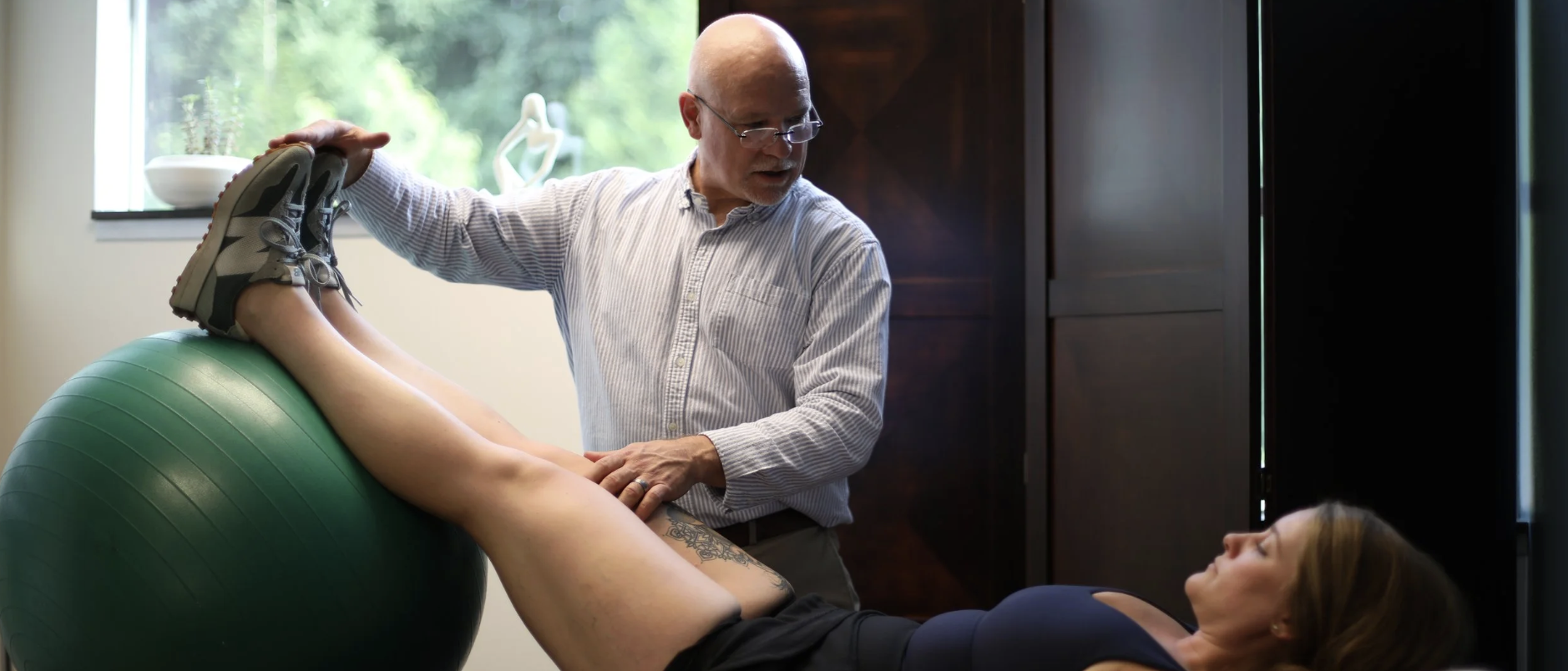
If you’re dealing with knee pain, you’re not alone. One of the most common causes is osteoarthritis, a chronic joint condition that affects millions of people and is often described as “wear-and-tear” arthritis. But that phrase can be misleading. The truth is, this “wear-and-tear” often comes simply from living life, years of walking, working, exercising, climbing stairs, and staying active. Your joints are designed for movement. Problems start when inflammation interrupts the system that keeps them moving smoothly and in the pattern of motion the body is designed to move in (biomechanics).
What Happens Inside an Arthritic Knee
Healthy joints rely on a natural lubricant called synovial fluid. This fluid allows the bones in your knee to glide smoothly, just as oil allows gears to glide smoothly in a car, while also nourishing the cartilage that protects the ends of those bones. When inflammation enters the picture, the joint can stop producing synovial fluid effectively. The result is what I describe as a “dry joint.”
Without proper lubrication:
● Movement becomes less smooth
● Cartilage begins to wear down
● The protective cushion at the ends of the knee bones starts to break down
● Joint pain begins. A new pattern of movement is created to avoid pain
Over time, this changes how the entire leg moves and functions. And that’s where things get interesting.
The Hidden Source of Your Knee Pain
Research consistently shows that over 90% of knee pain is related to hip weakness. When the hips aren’t strong or stable enough, the knee is forced to compensate. The joint begins absorbing forces from the hip and ankle never designed to handle. This creates abnormal stress patterns that contribute to inflammation, cartilage wear, and pain. In other words, the knee often isn’t the root of the problem, it’s the victim of it!
Why Treating the Knee Alone Often Fails
Many approaches focus only on the knee itself:
● Bracing
● Rest
● Anti-inflammatory medications
● Temporary symptom relief
While these can help manage pain temporarily, they often don’t address the underlying biomechanical issue. Your leg works as a connected system known as the kinetic chain; the coordinated relationship between the hip, knee, ankle, and 4 muscle groups. When one part becomes weak or dysfunctional, the others are forced to compensate. That compensation is often what leads to knee pain.
Restoring the Kinetic Chain
The encouraging news is that many cases of knee pain can improve dramatically when proper biomechanics are restored in the kinetic chain.
By strengthening, improving the timing (neuromuscular), and retraining the hips, legs, and ankles working together, you can:
● Improve joint stability
● Reduce abnormal stress on the knee
● Support healthier joint movement
● Help your body produce better natural lubrication
● Slow or reverse damaging movement patterns
This process isn’t about simply exercising harder or getting stronger. It’s about retraining the way your body moves so every joint does the job it was designed to do.
Ready to Find the Real Cause of Your Knee Pain?
If knee pain has been limiting your activity, affecting your workouts, or making everyday movement uncomfortable, it’s worth looking beyond the knee itself. If you suspect your knee pain might be coming from deeper movement issues, the first step is understanding how your hips, knees, ankles, and muscles are working together. When we evaluate and rebuild the entire leg’s kinetic-chain biomechanics, we can often uncover the real cause of the problem and create a clear path toward improvement. And that’s exactly what I specialize in.
A personalized biomechanical assessment can reveal:
● Hidden hip weakness
● Movement patterns stressing your knees
● Opportunities to restore healthy joint function
From there, we build a targeted plan to help you move better, be stronger, and get back to doing the things you enjoy.
If you’re ready to stop chasing symptoms and start fixing the root cause, let’s start the conversation.
